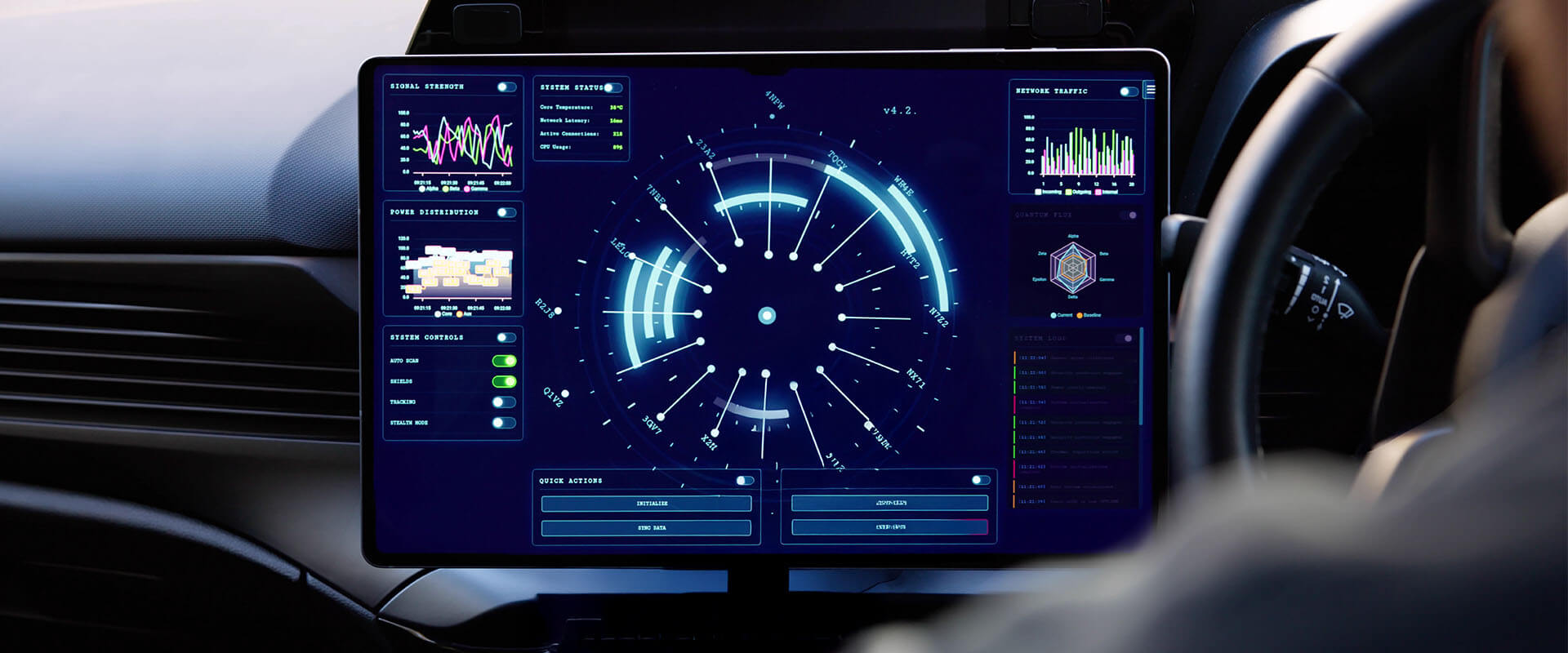
Car technology has moved far beyond engines and bodywork. Modern vehicles now combine advanced automotive technology, intelligent software and built-in safety systems designed to support drivers, reduce accidents and improve efficiency.
Key automotive technology trends today
One of the biggest shifts in car tech has been the rapid rollout of Automated Driver Assistance Systems (ADAS). Features such as adaptive cruise control, lane-keeping assist, adaptive light control and autonomous emergency braking are now common across many new models, not just premium cars.
It’s important to remember these systems are designed to support the driver, not replace them. For example, adaptive cruise control can maintain a safe distance from the car ahead, while lane-keeping systems provide steering input if the vehicle drifts unintentionally, but neither are a substitute for paying proper care and attention when driving. Crucially, responsibility stays with the driver at all times, with visual and audible alerts prompting intervention when needed.
Connectivity and Vehicle-to-Everything (V2X)
Connectivity is another major automotive technology trend. Vehicle-to-Everything, often shortened to V2X, allows cars to communicate with traffic lights, road infrastructure and other vehicles. This technology can provide real-time hazard warnings, traffic congestion updates and alerts about sudden braking in front, helping drivers stay more informed about the road ahead.
Advancements in electric vehicle (EV) technology
Electric car technology continues to evolve rapidly. New battery chemistries are improving range, durability and cold-weather performance, addressing some of the early concerns around EV ownership. Ultra-fast charging is also becoming more widespread, with some models now capable of recharging their batteries up to 80% in under 30 minutes, and in some cases, as quickly as 10-15 minutes.
Another emerging feature is bidirectional charging. This allows certain EVs to send electricity back to a home or the grid, turning the car into a temporary energy store.
Latest In-Car Technology
Next-gen infotainment & displays
In-car tech has seen some of the most visible changes. Large, high-resolution touchscreens are replacing traditional buttons, supported by cleaner interfaces and faster processors.
Importantly, manufacturers are designing infotainment systems to limit distraction. Video streaming apps, for instance, are typically locked when the vehicle is moving; head-up displays and voice-activated controls also reduce the need to look away from the road, helping drivers stay focused.

Biometric entry & driver monitoring
Biometric technology is starting to appear in new car technology, although it’s still in its early stages. Some manufacturers are testing fingerprint or facial recognition for vehicle entry and driver profiles. These systems can automatically adjust seating, mirrors and climate settings once a driver is recognized, as well as providing additional security.
More established is biometric driver monitoring. Cameras and sensors track eye movement, head position and steering input to detect signs of fatigue or distraction. If risk increases, the system can issue alerts or suggest a break.
Augmented reality & HUD interfaces
Augmented reality head-up displays (HUD) project navigation arrows, speed information and hazard warnings directly into the driver’s line of sight. Instead of glancing down at a screen, key information appears aligned with the road ahead. This approach supports safer information delivery, especially in complex driving environments such as unfamiliar city centres or motorway junctions.
Safety technology that protects, not distracts
Modern safety systems rely on a combination of radar, cameras and, in some models, LiDAR (Light Detection and Ranging); these sensors work together to detect vehicles, pedestrians and cyclists in all lighting conditions. Collision avoidance systems can first warn the driver, then automatically apply braking if no action is taken.
Many new cars now include intelligent alert systems that monitor steering patterns, lane position and braking behavior. Rather than encouraging hands-off driving, these systems are designed to keep drivers alert and involved, aligning closely with road safety guidance.
What’s On the Horizon: The Future of Car Tech
Semi-autonomous driving features, such as motorway assist systems, are already available in some vehicles. These systems can manage speed, braking and steering in specific conditions, usually at lower speeds or on clearly marked roads.
Despite advances, driver attention remains essential and current regulations require drivers to stay alert and ready to take control at all times, with in-car monitoring ensuring this responsibility is enforced. While technology can support, it's no substitute for careful, considerate driving.
Software-defined vehicles are becoming more common, with over-the-air updates that can enhance performance, add new features, or resolve issues without requiring a trip to the dealership. This means car technology can continue to evolve long after purchase.
Looking ahead, automotive technology is likely to combine biometric security, more advanced augmented reality and AI-powered assistants that respond naturally to voice commands. These features are being developed with safety at their core, focusing on reducing distraction rather than adding to it.
You might also be interested in

Preparing your car for winter: breakdown cover and cold weather tips
Why winter might be a good time to consider breakdown cover
Lower car running costs
Tips to lower day-to-day car running costs