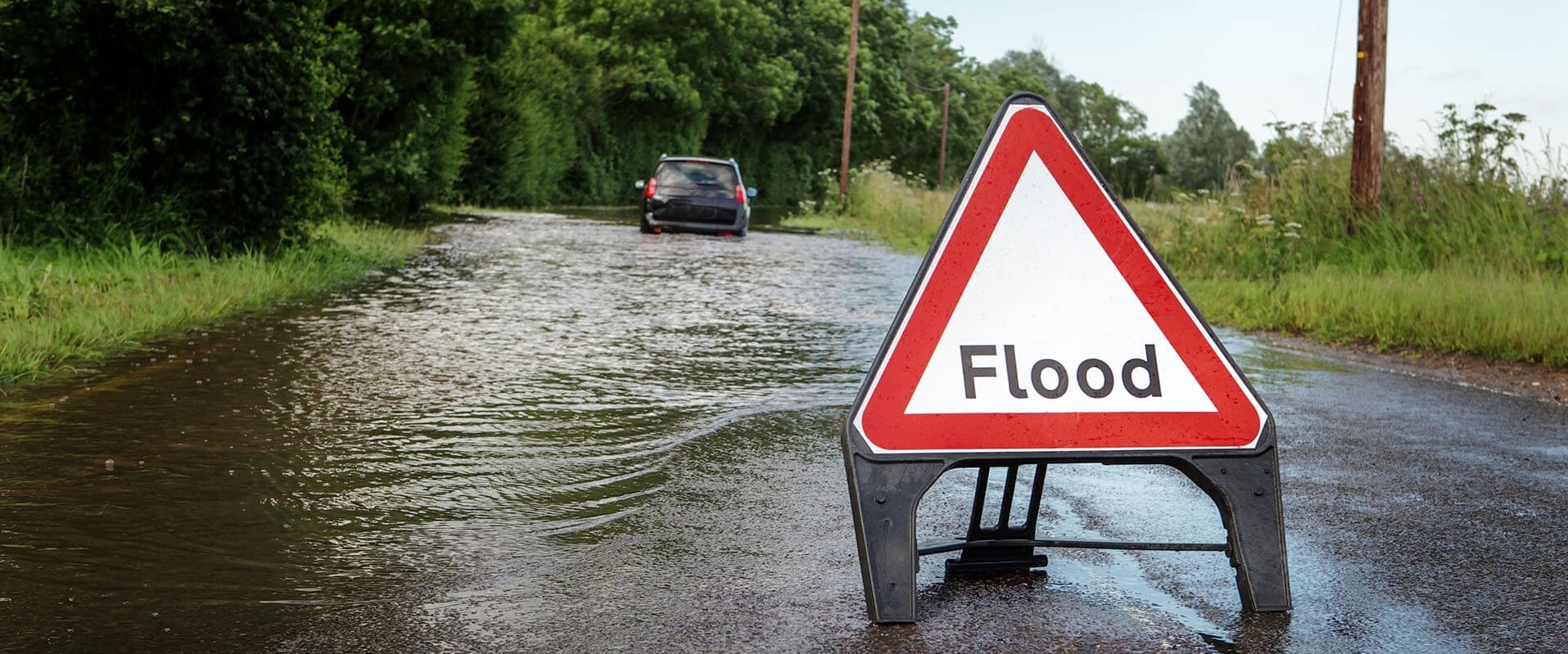
UK weather can change quickly, dry roads can become slippery, visibility can drop in seconds and heavy rain can lead to surface water or flooding with little warning.
Before you travel: preparing for driving in heavy rain or floods
Driving in heavy rain or floods increases risks for all road users, which is why it’s important to slow down, stay alert and stay safe.
A little preparation can make a big difference. Here’s are a few hints and tips to think about:
Check the weather and your route
Before travelling, check the latest Met Office weather warnings so you know what to expect and can plan accordingly. Warnings for heavy rain or flooding can help you decide whether it’s safer to delay your journey or take a different route. If you do need to travel:
- Avoid known flood-prone or low-lying roads
- Check for road closures or delays
- Allow more time for your journey, as traffic often moves more slowly on wet roads
Prepare your car and essentials
Driving in heavy rain puts more demand on your vehicle, so it’s important to make sure everything is working as it should. Before travelling, check:
- Tyres have good tread and correct pressure for wet road grip
- Windscreen wipers are clearing the rain effectively
- The lights are clean and working properly
It’s also sensible to keep your mobile phone fully charged in case you need to call for help, carry warm clothing and basic essentials if conditions worsen or you’re delayed.
Park smart if flooding is forecast
If heavy rain or flooding is expected, where you park matters. Where possible, you should:
- Move your car to higher ground
- Avoid parking near rivers, streams or flood-risk zones
- Steer clear of areas where water has collected before
Taking these simple steps can help reduce the risk of water damage to your car.
How to drive safely in heavy rain
Reduce your speed and increase your stopping distance
According to The Highway Code the stopping distance can be at least twice as long in heavy rain as on a dry road. This is why smoother braking, easing off the accelerator earlier and looking further ahead are all very important.
A good rule of thumb is to at least double your normal stopping distance. This creates a safer time gap on wet roads and gives you more time to react if traffic ahead slows suddenly.
Visibility and vehicle control
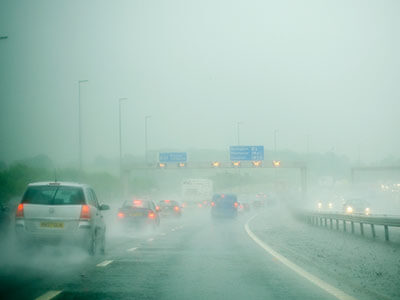
Heavy rain can reduce visibility quickly, especially at speed. To stay in control, use dipped headlights when visibility drops, avoid sudden steering, braking or acceleration and be mindful of spray from other vehicles, which can temporarily block your view.
Watch for surface water, especially on bends and at junctions, while keeping your movements smooth helps maintain grip on wet roads.
Driving through puddles, standing water and floods:
Flood water can be more dangerous than it looks, and even shallow water can cause serious damage to a car. If you can’t clearly judge how deep the water is, don’t attempt to drive through it, it’s safer to find an alternative route whenever possible.
Flood water may hide open drains or potholes, debris and uneven road surfaces. What looks like a shallow puddle could be deeper than expected.
How deep is too deep for a car?
There’s no safe depth that applies to all vehicles; even shallow water can be drawn into the engine, damage electrics, and affect brakes and steering. Once water reaches the bottom of your doors, the risk of serious water damage increases significantly.
The best way to drive through water if unavoidable
If you have no choice but to drive through water:
- Drive slowly in a low gear
- Keep revs steady
- Let oncoming vehicles pass first to avoid waves
- Never stop in the water
- Before continuing, ensure you test your brakes as soon as it is safe to do so
If your car stalls while driving through flood water ,RAC’s guidance is to not attempt to restart the engine, as restarting can draw water into the engine and cause severe, irreversible damage. If you are safe but stranded, call a recovery service and clearly explain the situation.
Can heavy rain or flooding damage your car?
Yes, water damage to a car can affect several areas, including the engine, electrical systems, brakes, interior upholstery and carpets. While rain on a car is normal, floodwater is different. It often contains debris and contaminants that can increase damage, which is why avoiding standing water where possible is so important.
When to contact your insurer
If you think your car may have been affected by flooding, it’s best to get in touch with your insurer as soon as you can. With esure Comprehensive Cover, flood damage is included, so if the worst does happen, it’s reassuring to know you’re covered.
You can make or manage a claim quickly and easily through your esure account or app, so support is always close at hand when you need it most.
You might also be interested in

Keeping safe when driving in snowy weather
Tips to help you when the weather turns

New Car Technology
Car technology has moved far beyond engines and bodywork. Find out what safety, EV & smart features are leading the way